VitalOKR Home

Category

OKR Diagnostics

16 articles

What Customers Keep Telling You: Prevention Objectives from Repeat Complaints

What Customers Keep Telling You: Prevention Objectives from Repeat Complaints

Complaint logs are managed as service tickets and rarely reach the planning cycle, which is why recurring failures stay invisible in OKRs. This diagnostic shows how to cluster complaint data into root causes, select one or two prevention-focused objectives, and run a ninety-minute workshop that uses customer evidence without overreacting to a single difficult week.


The Borrowed Critical Path: A Diagnostic for OKRs Held Up by Another Team

The Borrowed Critical Path: A Diagnostic for OKRs Held Up by Another Team

When a quarterly objective depends on another department, supplier or platform team, accountability can quietly become fiction. This diagnostic helps UK teams separate owned outcomes from borrowed ones, document dependency clauses and agree joint checkpoints that keep the critical path honest.

The Holiday Ledger: Setting Quarterly Targets When Your Team Keeps Four Calendars

The Holiday Ledger: Setting Quarterly Targets When Your Team Keeps Four Calendars

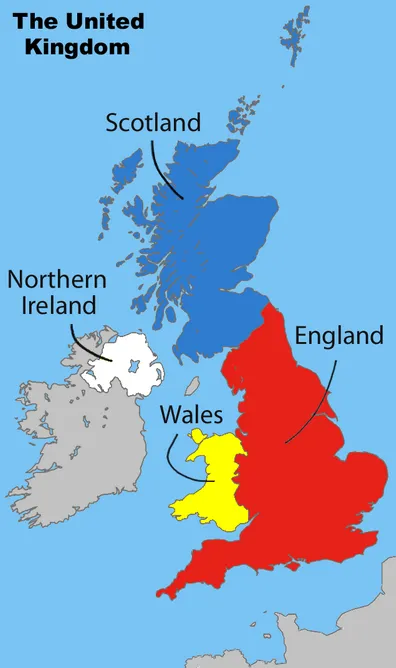
Most UK OKR sets are built on a single working calendar, yet England, Scotland, Wales and Northern Ireland lose different days to bank holidays, local closures and school terms. This diagnostic introduces a four-column holiday ledger and a short pacing rule for setting quarterly targets that remain defensible across all four nations — before the first check-in rather than after the post-mortem.

Fragile Numbers: Auditing Your Quarter's Assumptions the Week After a Fiscal Statement

Fragile Numbers: Auditing Your Quarter's Assumptions the Week After a Fiscal Statement

Fiscal statements rarely change what a UK team is trying to achieve, but they routinely change what it costs to get there. This is a structured two-hour diagnostic for the week after a Budget: separating assumptions that are merely uncomfortable from those that are now wrong, and re-baselining a key result without asking the team to re-commit to it.

The Vacancy Gap: First-Quarter OKRs for Teams Hiring After January

The Vacancy Gap: First-Quarter OKRs for Teams Hiring After January

Many first-quarter plans assume appointments that will not be made until spring. This diagnostic sets out how UK managers can test OKRs against a hiring freeze, distinguish outcomes from headcount requests and rewrite commitments around real capacity.

The Long-Stay Objective: A Four-Field Audit for UK Teams Before Quarter-End

The Long-Stay Objective: A Four-Field Audit for UK Teams Before Quarter-End

Some objectives reappear in every quarterly plan without ever being completed, retired or seriously reconsidered. This four-field audit helps UK managers test an objective’s age, evidence trail, ownership and decision history so that genuine long-horizon goals are protected and quiet occupants are removed before the next quarter begins.

The Finance Mirror: Testing UK OKRs Against the Management Accounts

The Finance Mirror: Testing UK OKRs Against the Management Accounts

Stalled OKRs are often diagnosed as a motivation problem when the finance plan tells a simpler story: the objective has no cost centre, no headcount and no supplier line. This diagnostic asks UK managers to test each objective against the ledger before rewriting it, and to shrink or stop it when the money genuinely is not there.

The Monthly Surgery: Reading the Observations on a Stalled OKR Set

The Monthly Surgery: Reading the Observations on a Stalled OKR Set

A stalled OKR set rarely fails in one dramatic moment; it drifts. This diagnostic monthly surgery gives managers a twenty-minute routine for reading four observations, recording them on one page, and deciding whether to adjust, pause or discharge an objective.

The Clean Line: Keeping OKRs Out of the Appraisal Room

The Clean Line: Keeping OKRs Out of the Appraisal Room

When OKRs are folded into annual appraisals, ambitious objectives turn into defensive paperwork and teams learn to sandbag their key results. This guide sets out a practical separation between OKR conversations and pay, promotion and performance ratings, with a two-meeting format and a one-page agreement for UK SMEs to adopt in 2026.

The Custodian Model: Keeping Objectives Accountable When Someone Is Away

The Custodian Model: Keeping Objectives Accountable When Someone Is Away

Parental leave, job shares, long sickness and extended absences quietly orphan more objectives than any strategy failure. This playbook sets out a custodian model for UK teams: time-bound temporary ownership, handover notes capped at three pages, a structured re-entry conversation and a ten-minute quarterly check for orphaned OKRs.

After the Abandoned Objective: A Diagnostic Post-Mortem for UK Teams

After the Abandoned Objective: A Diagnostic Post-Mortem for UK Teams

Abandoned OKRs are not merely evidence of poor discipline; they are a source of diagnostic information. This practical post-mortem gives UK managers five questions, a one-page template and a 30-minute session to decide whether to revive, replace or retire an objective without adding another recurring meeting.

Visible, Not Verbose: A Short Weekly OKR Review for Hybrid UK Teams

Visible, Not Verbose: A Short Weekly OKR Review for Hybrid UK Teams

A weekly OKR review does not need to become another meeting. This fifteen-minute Friday ritual gives UK teams a disciplined way to test confidence, clear blockers and set next week's emphasis, with practical guidance for hybrid working and a UK SME case study.